
If someone had asked me about my masturbation practice years ago, I would have had a very different answer.
Today, the first thing that comes to mind is stillness.
I live with post-traumatic stress disorder, and over the past few years my libido has almost disappeared. What surprises me most is not that it happened, but how completely it happened. I never imagined such a radical shift was possible.
What’s important, though, is that my lack of desire doesn’t come from fear of sex. I’ve had deeply pleasurable sexual experiences, both alone and with partners. I know my body is capable of desire, fantasy, pleasure, and orgasm. Those experiences are still part of me. I don’t associate sexuality with danger, nor do I feel anxious when I think about it.
The difference is that my energy lives somewhere else now.
People often imagine PTSD as being trapped in the memory of a traumatic event. For me, the trauma didn’t end there. It continued in everything that followed.
Years of remaining alert.
Protecting my children.
Protecting my family.
Protecting myself.
Learning to anticipate criticism, public scrutiny, disbelief, and hostility. Being insulted, physically attacked, and repeatedly confronted simply because I spoke about abuse. Wondering who wanted to silence me, and why.
That kind of vigilance changes a body.
Not because it makes pleasure impossible, but because it asks the nervous system to invest its energy elsewhere.
Healing has required an extraordinary amount of emotional, cognitive, and physical energy. There are days when simply feeling grounded, doing my work, maintaining relationships, creating something meaningful, or finding a moment of peace already feels like a full day’s work.
When so much of your life force is devoted to surviving, rebuilding, protecting, and making sense of what you’ve lived through, sexuality quietly moves out of the center of your life.
Not because it has disappeared.
Because something else needs you more.
I don’t have a masturbation routine anymore. I don’t notice a particular time of day when I feel drawn toward it. I don’t think much about techniques, fantasies, lubricants, positions, or orgasms because those questions rarely arise for me now.
Sometimes weeks or even months pass without masturbation crossing my mind.
For a while, I wondered whether something inside me had broken. We live in a culture that often equates libido with health, vitality, confidence, and even femininity. When desire becomes quiet, it’s easy to believe you’ve lost an essential part of yourself.
Over time, I realized something different.
Nothing is broken.
My body has simply been busy.
Busy surviving.
Busy adapting.
Busy carrying more than I ever imagined it could carry.
I’ve come to believe that libido follows where our life energy is being invested.
Right now, mine is invested in understanding myself, integrating trauma, rebuilding trust, caring for the people I love, creating meaningful work, and learning how to feel at home in my own life again.
That realization changed the questions I ask myself.
Instead of wondering when my libido will return, I began asking:
How do I inhabit my body today?
That question has become a different kind of intimate practice.
I notice when my breathing softens.
I notice when my shoulders finally relax.
I notice the warmth of sunlight on my skin, the comfort of clean sheets, the smell of coffee in the morning, the rhythm of my steps during a walk, the quiet relief of realizing that my nervous system has settled, even if only for a little while.
I allow myself to cry when I need to cry.
I laugh without questioning whether I deserve it.
I rest without feeling guilty.
These moments may not be sexual, but they are deeply physical.
They are deeply intimate.
They are reminders that I still live inside this body.
Perhaps this is my practice now.
Not masturbation in its traditional sense, but a practice of embodiment.
A practice of presence.
A practice of listening.
A practice of learning that intimacy with myself can take many forms.
I don’t know when my libido will return to the center of my life. I imagine it will, perhaps differently than before. I don’t feel pressured to make that happen.
Like many things in healing, I believe desire returns when there is enough space for it.
Until then, I don’t experience this season as a loss.
I experience it as an honest reflection of where my deepest energy is currently being asked to go.
If anything, PTSD has expanded my understanding of intimacy. I no longer believe it begins with sexuality.
Sometimes intimacy begins much earlier.
It begins the moment we stop abandoning our bodies.
The moment we choose to stay with ourselves.
The moment we discover that simply inhabiting our own body—after everything it has endured—can be its own quiet form of pleasure.
Today, that is enough.
Today, stillness is not the absence of desire.
It is the place where my body is slowly remembering that it is safe enough to simply be.
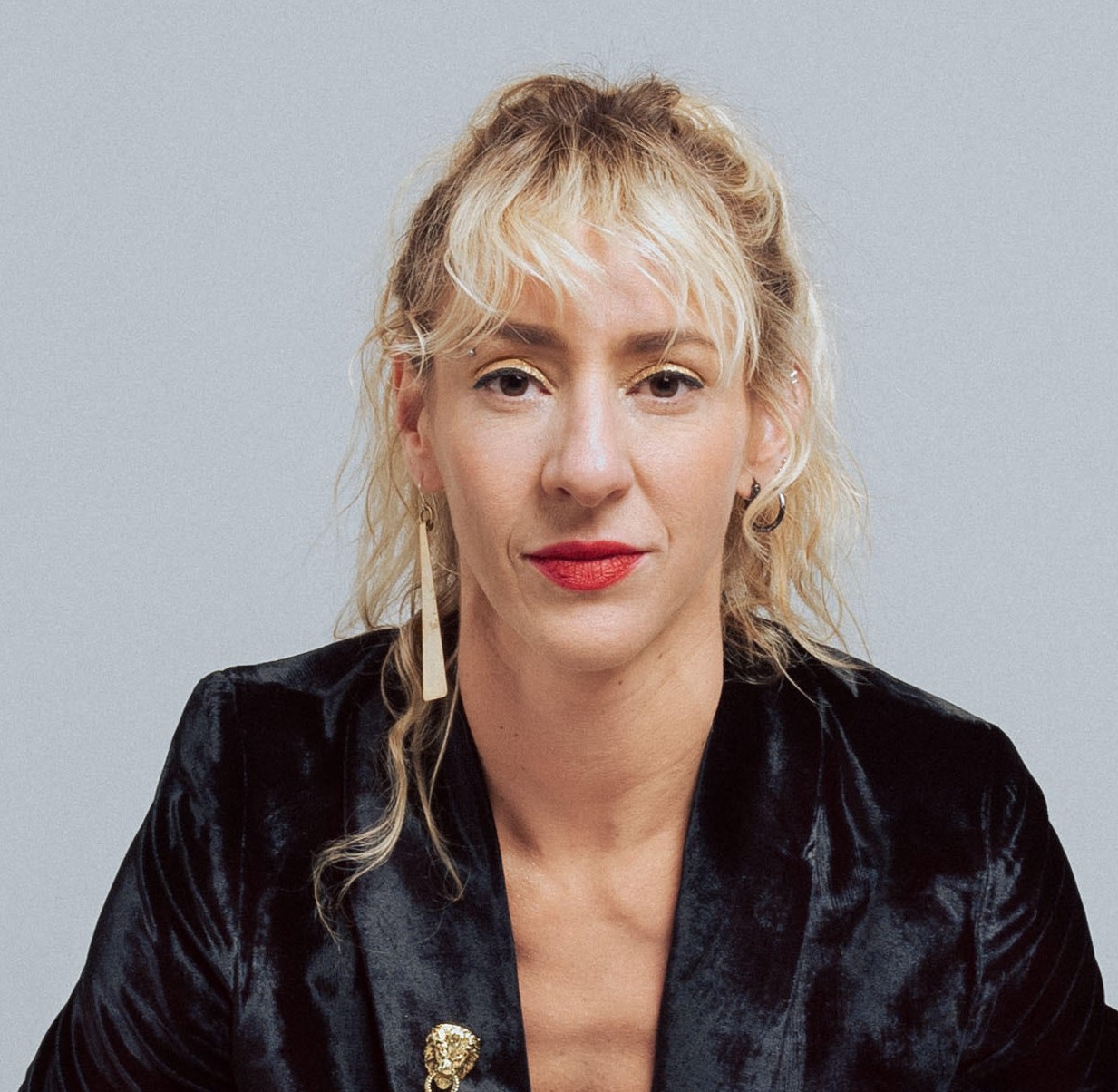
Raffaella di Girolamo
Santiago, Chile
Languages:
Spanish, English
Raffaella is a certified Bodysex Coach
Read Articles by Raffaella

Pleasure is No Longer a Secret
I am my own religion. That didn’t come from faith; it came from exhaustion — from learning that no god was coming to protect me. I grew up in a country that confuses discipline with dignity, silence with virtue. I learned too soon what violence can do to a child’s...

Betty
Betty, oohh Betty, sexy generous and cool Betty. That goddess introduced me to a community, to Carlin, to love and respect, to generosity and security. She taught me that time is important and it's not. She taught me how to become an abstract body that is no longer...
Get Naked and Come In
"Get naked and come in." Those were the first words I heard. "You're Raffaella from Chile? I bet Betty you’d be the first. You’ll get certified, right?" said Carlin Ross. The entrance was a hallway with silver hangers, I chose one and left my belongings. Since the...