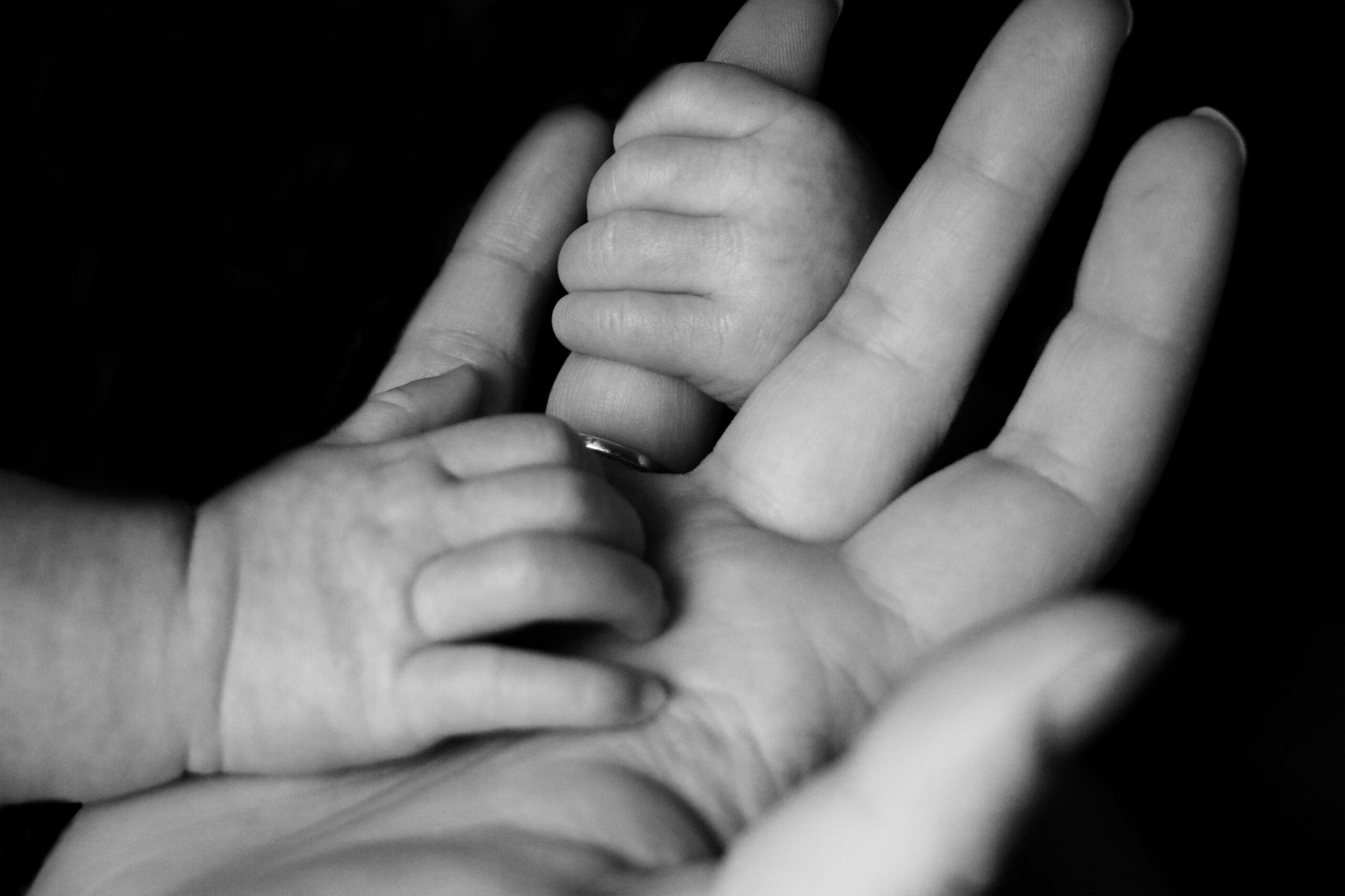

Part One: Becoming Parents
“Do you get to choose how many kids you have?” my 7 year old niece asked me last week.
“Sometimes,” I replied. She cocked her head at me.
“I wanted 2 daughters, I had one, and I ended up with none,” I said. Her mouth fell open.
“Sometimes life is different than we plan,” I said.
“Oh,” she said, and the conversation drifted as it does with kids.
She’s too young to remember my ex-wife or to have met my foster daughter. You could say the person she knows as Titi Forest is someone who’s through the billboard of their life, many plot twists, grief ceremonies, and radical acceptances past where I ever imagined I’d be.
As a childless parent, my story makes many people uncomfortable. They often don’t know how to hold my parenthood journey when I tell them.
“Well, everything always works out for the best,” they might breathily say, wringing their hands. Or, “if you put your mind to it, you can do anything. You could still be a parent. It’s never too late.” They gaze into the distance, hoping their magical thinking will make them feel better about my life. This last one is hilarious in its particular disconnection from the fact that I’m close to 50, and have moved on to other life dreams.
In case you’re wondering, the appropriate response is something like, “that sounds really hard,” or “wow, that’s a lot to have gone through,” or even, “how did you get through it?” Be with my story in compassion and curiosity. Let it knock around inside you, feel it without trying to silver line or diminish it. It’s uncomfortable but there’s nothing that needs to be denied or fixed.
The marketing warlocks have been spoon-feeding us the delusion that if we’re good enough and deserving, we’ll get whatever we want whenever we want it. But this entitlement creates a schism from reality. Reality is, that hard things happen in our lives and it doesn’t mean anything about the virtue or innate goodness of the protagonists. It means that life is complex and variable. The manifest world doesn’t exist merely for our enjoyment. Nor do we deserve the version of our life inside our heads simply because that’s what’s there. This desire to bend life to our whims is bad and unconscious sorcery and incorrect thinking.
My wife and I initially had a friend agree to be our known-donor. We’d signed legal documents and everything, and were on the last step of getting his sperm. We were in our mid-30s and all committed to and pleased with the arrangement, or so we thought. Out of the blue, his newish girlfriend got weird about it and he pulled out, so to speak. So we went to the sperm clinic. We inseminated each other at home for many months. I got pregnant but miscarried at 7 or 8 weeks.
I consulted a fertility expert who told me, among other things, to drink filtered water instead of tap water.
When I told my wife this she fell over.
“Oh yeah, if we just drank less Seattle tap water, we’d be more pure, more fertile. Is there anything else we can blame on women’s lack of purity?” she laughed some more and shook her head. She’s a family medicine nurse who works with addicted mothers. These women struggling with intense dependence on hard hard drugs found themselves pregnant all the time.
Looking back, I’m pretty sure my issue was low progesterone. The fertility expert also never mentioned, but I want to tell you, dear reader, in case it’s helpful, that if you inseminate again right after a miscarriage you’re more likely to become pregnant quickly because your hormones are all primed. Post-miscarriage you’re in this limbo of sorts where your body still wants to be pregnant, so things like timing ovulation don’t matter like they normally do. But I didn’t know this then.
A third of all pregnancies spontaneously miscarry and, between trusting my body and not wanting to carry an unviable pregnancy to term, I wasn’t that upset about it. It was nothing that wasn’t grieved and released.
Plus, after miscarrying, a wild feeling came over me that still remains. Relief. My body didn’t want to grow another human inside of it. It was a strange feeling because, aside from always wanting to be a parent, I was taught that birthing and raising a child was the pinnacle of my existence. I’d very much hoped my wife would get pregnant, but it turned out, for reasons that aren’t mine to share, she couldn’t.
So we became foster parents with the plan of adopting from the system. We took the courses and submitted every part of our lives to invasive interviews and scrutiny by case workers with the power to accept or deny our ability to create a family this way. Inspectors combed through our house telling us to move that and install this. All of which we did.
And for the next part of this story, dear reader, I ask you to hold a significant amount of complexity with me. My invitation is to pause perhaps after each paragraph, and let it land.
Rotten from its inception, the foster system’s initial purpose was to Anglicize the native children of Turtle Island, aiding through formalizing, the colonization process. The white man forcefully snatched kids from their families, cut off their hair, and ripped their native languages from their mouths. It severed kids from their culture and ways of life. We learned this in the training.
Tribes are effectively countries within the country, with their own governments and sovereignty. In 1978, the year I was born, the Indian Child Welfare Act passed, which attempted to support tribes’ sovereignty over their children. To my knowledge, ICWA does not address or repair the devastation and damage that was done for the decades and decades prior.
Also part of the training, we were guided through visualizations to empathize with where the foster kids were coming from. Sure, we were doing something good in becoming foster parents because there are a lot of kids that need homes. And.
We imagined what it would be like to suddenly land in the care of strangers. We imagined smelling that new house and eating the strangers’ unfamiliar food. In another visualization, we were guided through having to leave everything familiar and that we cared about behind, with no warning. What of our things would we put into a trash bag to take with us? How might we attempt to adapt to totally foreign circumstances, with no one familiar to help or comfort us? We were admonished to acknowledge to our foster placements that our house probably felt weird.
We learned about Adverse Childhood Experiences. And we were told that to take a child, even one who was neglected or abused, away from familiarity itself created ACEs. The kids we’d be parenting already had ACEs, and them coming to us through the system created more. So to be a foster parent is to knowingly take part in generating further trauma for the children. The system knowingly creates trauma, PTSD, and CPTSD for every child who comes in contact with it.
The foster system itself is a display of Brokenhearted Culture. Yet the people who trained us were some of the most angelic humans I’ve ever met. Big-hearted, benevolent, boundaried, loving, and accepting adults who fostered and adopted child after child, and who gave their lives to this cause.
This situation is paradoxical and complex, so it’s not a matter of figuring out THE solution. I don’t want kids abused or neglected in their bio homes or otherwise. And I don’t think adding to their trauma should be happening. I don’t have the answers but I do feel that being able to hold the intricate layers without ignoring or denying what’s so is part of us being good adults for our children.
One day, before receiving our official license, we got an email offering us our first placement, and could she be dropped off tomorrow morning.
We looked at each other as we read over Laylay’s profile. She seemed like a great match. We congratulated ourselves for apparently being licensed and went to Target to get her shampoo and conditioner.
And this is where my wife’s and my stories begin to diverge, where we arrive at a crossroads. Some of which I’ll recount in the next piece.
Part Two: Foster Parenting
Laylay arrived one sunny March morning with a van load of stuff including a huge Barbie house. Foster kids usually either attach right away to those around them or withdraw. Laylay called us both mom on the first day.
Small for 7, she was agile and coordinated. She had bright knowing eyes, a whip smart sense of humor, and no front teeth. Dazzling and outspoken, she could command and charm a room full of adults. I love a headstrong and opinionated kid and Laylay and I instantly connected. Preferring a quiet and agreeable child, one who didn’t talk back or cause a fuss, my wife didn’t feel the same way.
The simple part of having Laylay with us was letting my parental instincts kick in. Everything else was a nightmare. We did an adequate job “good-enough parenting” Laylay for the 5 weeks she was in our lives. It was 5 only weeks but everyday was a month. We were trained to think of the red-tape, zero parental rights, and every decision being run through case workers as “team parenting.” We didn’t feel like parents though, but more of a weigh station or shuttle service.
One afternoon Laylay and I walked to my community garden plot and I encouraged her to put her hands in the earth.
I gave her nibbles of things like herbs and kale flowers, and on our walk home something wonderful happened. She became curious about the natural world around her. Before this point with us, curiosity wasn’t her approach, but rather a know-it-all-ness.
“Can we eat this?” she asked pointing to a tree.
“Yep,” I said, explaining what parts of the Oak were edible.
“What about this?” she said gently pulling at a rosemary bush growing over the sidewalk.
“Absolutely. Pinch the leaves and smell them.”
“Wow!” she sniffed, her giant eyes getting even bigger.
“I know, right!”
“We could cook with it!” The whole walk home was her in exuberant curiosity.
I’m sure there are research papers on how trauma shuts down curiosity but I haven’t read them. I’ve observed though, that it’s hard/impossible for curiosity and the 4F trauma responses (fight, flight, fawn, and freeze) to coexist, and if we can get to a place of cultivating and practicing curiosity, then we can pull ourselves out of a 4F response and into a place of being able to respond to what’s so in current reality.
Walking also helped her sleep through the night so I started taking her on long walks. After just a couple of them she begged to walk everywhere and would all but melt down if we couldn’t walk. I applauded her wise little system for knowing what it needed and we walked as much as we could.
Even though we’d been told she had “no behavioral issues,” among other things, Laylay angrily punched me everyday. When we tried to talk about this with her therapist, the therapist looked at us skeptically and said no one had ever reported this behavior before. She acted like we must be incorrect or lying. Laylay’s blows didn’t physically hurt, but energetically they took a toll. It didn’t matter how many times I said, “this is a no hitting household. I will never hit you and you also don’t get to hit me,” I still got punched. Had my wife and I been on the same page, I could’ve perhaps weathered Laylay’s physical processing on me while we troubleshooted a solution. I wish I’d have installed a punching bag for her or something. It wasn’t Laylay’s fault that she punched me everyday and it wasn’t personal. She was a child who’d been through way too much in her short life, of course she needed to punch something. She had every right to be angry at her circumstances. I just didn’t have the skills or support to get Laylay the right outlet for her justified anger.
Though this could never have happened, I suspected that if she could just have been next to my body for a few months, like not leave my side, copying what I did physically and energetically as we moved through the day, that her system would’ve learned from my system, how to “good enough” regulate and begin finding some stability. But that’s not foster life. She had family visits once or twice a week, from which she’d return with a tummy full of sugary treats, often angry and spun out. She had her new school, OT, and therapy twice a week. She would return from these things in various states. Disaffected, silent, moody, hateful. And just when these reactions metabolized out of her system, it was time for another appointment.
It’s my viewpoint, observation, and experience that attempting to parent well in our culture, fostering or otherwise, is to walk on slippery rocks upstream in fast-moving, thigh-high currents. Parenting isn’t hard and there are lots of ways to do it well. The agreement between parent and child is simple: the adults do the things the tiny human needs done and does them to the best of their ability. It is a one-way nurturing relationship. A sacred task as old as time, it’s fabulously repetitive, grounding, and rewarding. Parents (and ideally a community of others) create and tend the container of development, boundaries, and nourishment for the child. The child’s job is innocence and growth, and the adult’s job is grounded loving structure and foundation. When this simple sacred contract hits Brokenhearted Culture things get messy. Collectively, we don’t have a container that supports parents parenting well, and therefore our kids can’t kid well either.
Complications arise if the parent won’t or can’t be the mature adult the child needs. Turning the tables on kids, like needing them to do something for the adults, anything besides be in their child-nature, turns the sacred relationship upside down. We call these things parentification, growing up with emotionally immature parents, abuse, neglect, etc.
The split between my wife and I grew. Becoming parents had been in both of our online dating profiles. She had an ex who had a kid. My wife had no legal rights or claim to the child but was attached to her. Knowing this from the beginning, I’d supported their relationship, under the impression it was more of an auntie role, not a second parent role. In the same way she didn’t resonate with Laylay, I didn’t resonate with her ex or the child. My wife was not open to shifting anything about this arrangement once we had Laylay. It was really hard to try to establish our parenting habits together, especially since I knew she didn’t resonate with Laylay. It felt like she had one foot out the door parenting with me. My animosity grew. And my wife was coming to terms with her truth: that she already had the family she wanted.
There are so many other things that happened and so much more I could write about, but in the end we couldn’t do it. We were exhausted.
Even though we agreed to tell her together, my wife told Laylay she’d be going to a different home while I was at work.
“But we agreed to tell her together,” I said.
“I thought you’d get too upset so I told her myself,” she replied.
We tried to stay in contact with Laylay after she left our house, offering to be weekend respite or babysitters anytime it was needed, but that’s not how the system works. She was moved on, a tiny shell crashing on the shore amid the tide and waves of a broken system.
I think about her often. About us sitting on the porch while I combed and braided her hair, making up fanciful stories for each other. I think about how well she fit in with my extended family and how much her first grade teacher adored her. I think about her vocalizing and dancing in the bus tunnel to the beat in her head as we waited for the Light Rail.
I think about the day I had a migraine and how, while I was in bed with a washcloth over my eyes, Laylay came in and began doctoring me. She hemmed and hawed over my condition. She put her hand on my forehead and took my pulse with her tiny fingers. She pulled out a clipboard and paper from somewhere and asked me to fill out both my primary and secondary insurance information. She rubbed my temples, gave me water and health recommendations.
Our plan had been to foster another kid, to find one we both liked. But at the same time, the state changed the laws and told us to close down our vacation rental business if we wanted to continue fostering, an action that would’ve cut my income in half. To get licensed we’d made the units completely separate and you couldn’t get between them without going outside. Yet someone could be a foster parent and live in an apartment or condo. It was the last hypocritical straw I could take from the system. We turned in our license and though we tried to salvage our marriage, we separated about a year later.
It’s a lot to process these experiences, to claim the title of childless parent. It’s been my aim not to deny or diminish my experience, not to harbor too much resentment towards my ex-wife for her humanity and shortcomings. Or towards myself that I couldn’t just have worked out how to keep Laylay in my life.
“I’m sorry I couldn’t do better by you, little one. God, I hope you’re okay.”
I send her blessings often. She’s a teenager now and my hope for her is that she landed somewhere soft and stable. That she’s surrounded by magnificent good-enough adults and that she’s planning her high school years and beyond.
Forest Iverson
Seattle, WA
Read more posts by Forest

Pleasure is Radical
I’ve been struggling with the blog topic of pleasure because each time I start to write about the yumminess of it, what swings in bombastically and unannounced are the injustices and wrongs of our time, the many tasks I need to attend to, and all the things my monkey...

Anger and Our Wild Selves
“Betty used to say, ‘Women need to get in touch with their anger and they need to do it all the time,’” Carlin said as the group of us discussed this month’s blog topic over zoom. “Pleasure connects us to our anger,” said one writer. “I actually have a really hard...
Menopause Resources Recommended by Forest
Art by Betty Dodson No one is paying me for this compilation. I’m just sharing my bumbling around and what’s worked. I hope you find it helpful. I also don’t necessarily agree with 100% of what each source preaches. Please also take what resonates and leave what...

The Life Process of Menopause
Menopause is a Life Process not a medical condition. And it’s not something that’s unfortunately wrong with 51% of the human population and toothed whales. I’m still learning how to menopause in a good way. The last four years have been the hardest health years of my...

Hemorrhaging
As wild as they are, the hot flashes I’ve started having the past couple months are easier than the hemorrhaging I was experiencing the last couple years. Depending on who you talk to, hemorrhaging is a sign of perimenopause and also caused by environmental factors....

The Abortion Issue is a Red Herring
During my fertile years I had one abortion, one miscarriage, and one foster daughter. Because of the diligent work of The Janes and the wise women in the 1960s and 70s, when I had an abortion at 21 in 1999, I had a different experience than many in the past. My mom...

Death and Renewal to Sexual Lies I No Longer Believe
I recently heard a famous woman remark about how ugly her pussy had become now that she was older and my heart broke. She’s brilliant, hilarious, creative, and I knew the words weren’t hers. I suspect she’d been taught, like so many of us, that denigrating her pussy...

Thanks to Betty
“But is this grand enough for you, Betty?” I asked aloud to the small bottle of her ashes that sits next to me as I write. “Please help me be succinct without diminishing you but also not put you so high upon a pedestal that you become distorted. And help me write an...

Dear Ex-Boyfriends, Dear Younger Self
Dear ex boyfriends, lovers, et al, I have some things to say that might be hard for you to hear, but I can’t hold them and not speak about them anymore. Your lack of listening hurt me. And it bothers me that you let the words “calm down,” “too emotional,” and “not...
Blood Everywhere
With my pants around my ankles, I squatted low in the 3-stalled corporate office restroom. My butt cheeks just a few inches from the floor, I pressed my PC muscles down and pulled the tip of my menstrual cup. Because squatting shortens the vaginal canal, it was then...